
'People always short-change the resilience of the economy.'

India's economy will do well once vaccination reaches a critical mass as pent up demand, global recovery and easy financial conditions will boost activities, RBI's Monetary Policy Committee (MPC) member Ashima Goyal said on Tuesday.

'India has entered an economic super-cycle driven by a housing cycle turnaround.'

Despite unprecedented levels of uncertainty in Samvat 2077, investors have little to complain about on the returns front. The BSE Sensex delivered returns of 38 per cent in this period, while the Nifty registered a return of over 40 per cent. As is the case in bull markets, companies in the small- and mid-capitalisation basket outperformed the benchmarks, with returns almost twice those of frontliners.

Paytm CEO Vijay Shekhar Sharma said on Wednesday that the company's share market performance has been in line with that of global peers in the sector over the past six months due to macroeconomic factors. "Macro factors like quantitative easing, free money due to US monetary policy and other parameters led to a spook in the market in terms of pricing the IPO. "Paytm's shares have received a similar response to that of global peers in the last six months...But that is not a complete reasoning.

India needs to sustain a GDP growth rate of 8 per cent to become a five trillion dollar economy by 2025, the Economic Survey has stated.

Listen to what Taher Badshah, Sr. Fund Manager & Co Head - Equities, Motilal Oswal Asset Management, has to say.

Moody's Investors Service on Wednesday slashed India's growth projection to 9.6 per cent for the 2021 calendar year, from its earlier estimate of 13.9 per cent, and said faster vaccination progress will be paramount in restricting economic losses to June quarter.

The Reserve Bank of India's limited intervention was not enough to lift the rupee, the worst performing Asian currency since March.

Fitch Ratings has cut India's economic growth forecast to 8.7 per cent for the current fiscal but raised GDP growth projection for FY23 to 10 per cent, saying the second COVID-19 wave delayed rather than derail the economic recovery. In its APAC Sovereign Credit Overview, Fitch Ratings said India's 'BBB-/Negative' sovereign rating "balances a still-strong medium-term growth outlook and external resilience from solid foreign- reserve buffers, against high public debt, a weak financial sector and some lagging structural factors". The 'Negative' outlook, it said, reflects uncertainty over the debt trajectory following the sharp deterioration in India's public finances due to the pandemic shock.

The Reserve Bank hinted at a marginal hike in key policy rates when it reviews its monetary stance tomorrow, saying inflation was still above the comfort zone and that there was uptick in credit to non-food sectors.
At present, the repo rate acts as the policy rate when liquidity is in deficit mode while reverse repo becomes the operating rate when there liquidity is surplus.

Analysts mostly prefer domestic plays beside select films with foreign exposure.

From the pandemic shocks to state polls to global trends, a raft of sentiment drivers are expected to steer the Indian stock market in 2022 after a historic year of massive investor returns and milestones. The Union Budget, which will be closely watched for further reform moves, and quarterly earnings of corporates will be among the developments on investors' radar amid global central banks moving towards tighter interest regime in the wake of inflationary pressures. The year 2021 was rewarding in a big way for equity investors.

After a sharp sell-off in the past two months, overseas investors were once again seen turning bullish on Indian equities. FIIs bought shares worth Rs 63.5 billion in the past five sessions, their highest weekly investment tally in many months.

Ahead of the Budget 2009-10, the economic survey on Thursday suggested tax cuts and increase in government expenditure as part of another stimulus package to help the economy overcome the global shock.

Nasscom said growth for the current financial year (2016-17) was expected to be 8.6%

Although there is headroom for further monetary policy action, at this juncture it is important to keep our arsenal dry and use it judiciously: RBI's Das.

Fitch Ratings on Thursday said the resurgence of COVID-19 infections may delay India's economic recovery, but won't derail it, as it kept the sovereign rating unchanged at 'BBB-' with a negative outlook. It projected a 12.8 per cent recovery in GDP in the fiscal year ending March 2022 (FY22), moderating to 5.8 per cent in FY23, from an estimated contraction of 7.5 per cent in 2020-21. Fitch had in June last year revised outlook for India to 'negative' from 'stable' on grounds that the coronavirus pandemic had significantly weakened the country's growth outlook and exposed the challenges associated with a high public debt burden.

Thanks to the recapitalisation by the government and measures taken by the central bank, collapse of any large housing finance company won't pose as big a risk as it had six months ago.

The Reserve Bank's rate-setting panel, Monetary Policy Committee (MPC), began its three-day deliberations on Wednesday amid expectations of a status quo on benchmark rate mainly on account of uncertainty over the impact of the second wave of COVID-19 pandemic. Moreover, the fears of firming inflation may also refrain the MPC from tinkering with the interest rate in its bi-monthly monetary policy outcome to be announced on Friday. The RBI had kept key interest rates unchanged at the last MPC meeting held in April.

Amid uncertainties arising out of the second wave of COVID-19, the Reserve Bank on Thursday said that a durable revival of private consumption and investment would be critical for sustaining economic growth post-pandemic. Observing that 2020-21 has left a scar on the economy, RBI in its annual report said, "in the midst of the second wave as 2021-22 commences, pervasive despair is being lifted by cautious optimism built up by vaccination drives." The second wave of the pandemic has prompted revision of growth projections for the current fiscal and the consensus appears to be gravitating towards RBI's forecast of 10.5 per cent, the report added.

India attracted an estimated $49 billion FDI in 2019, a 16 per cent increase from the $42 billion recorded in 2018.

Foreign Direct Investment into India rose by 13 per cent in 2020, boosted by interest in the digital sector, and while fund flows "declined most strongly" in major economies such as the UK, the US and Russia due to the Covid-19 pandemic, India and China "bucked the trend", the UN has said.

'Q1 is going to bear the brunt of the second wave, exposing full-year GDP forecasts to downward revisions, unless phase-3 of vaccination is executed quickly.'
The Reserve Bank of India on Monday said the medium-term outlook remains favourable with economy in 2004-05 set to build upon the robust performance recorded in the previous fiscal though a fuller assessment

the broader NSE Nifty settled 114.90 points, or 0.96 per cent, higher at 12,086.70. Axis Bank was the top gainer in the Sensex pack, rallying 4.21 per cent, followed by Vedanta 3.75 per cent, SBI 3.39 per cent, Maruti 3.20 per cent, IndusInd Bank 3.07 per cent and Yes Bank 2.87 per cent. Bharti Airtel slipped 1.98 per cent, Kotak Bank 1.38 per cent, Bajaj Auto 0.88 per cent, Asian Paints 0.31 per cent, HDFC Bank 0.05 per cent and HUL 0.03 per cent.

US President-elect Joe Biden will work towards providing a roadmap to American citizenship for nearly 11 million undocumented immigrants, including over 500,000 from India, and will also establish a minimum admission number of 95,000 refugees annually.

While efforts are being mounted on a war footing to arrest its spread, COVID-19 will impact economic activity in India directly through domestic lockdown. The second-round effects, it said, would operate through a severe slowdown in global trade and growth.

The Reserve Bank on Friday projected retail inflation to be in 5-5.2 per cent range during the first half of the next fiscal year, expecting further softening of vegetables prices in near term. Also, it has lowered the retail inflation forecast for the current January-March quarter of 2020-21 fiscal at 5.2 per cent. The Reserve Bank (RBI) has kept the key policy rate unchanged at 4 per cent, with an accommodative stance, so as to ensure that inflation remains well within the target, Governor Shaktikanta Das said while announcing the last monetary policy of 2020-21.

Top losers in the Sensex pack on Friday included Bajaj Finance, ONGC, IndusInd Bank, PowerGrid, L&T, Axis Bank, NTPC, Bharti Airtel, HDFC, HDFC Bank and Kotak Mahindra Bank, falling up to 2.08 per cent.

'The finance ministry's decision to accept the deficit target of 4.5 per cent in 2025-2026 appears to have emanated from its endorsement of the Finance Commission's view that the Indian economy will continue to remain impacted by the pandemic, adversely undermining its growth potential,' notes A K Bhattacharya.

The central bank can directly print money and finance the government, but it should avoid doing so unless there is absolutely no alternative, former RBI governor D Subbarao on Wednesday said while pointing out that India is 'nowhere' near such a scenario. In an interview with PTI, Subbarao suggested that to deal with the second wave of COVID-19 induced slowdown in the economy, the government can consider Covid bonds as an option to raise borrowing, not in addition to budgeted borrowing, but as a part of that.

Dealmakers and advisors feel investors are shifting their focus to Asia Pacific, especially India, owing to geopolitical instability driven by events such as Brexit and protectionist trade wars.

The budget-making exercise offers golden opportunities despite challenges, observes Shankar Acharya, former chief economic adviser to the Government of India.
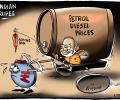
Even as rising crude oil prices, trade war fears and a sliding rupee cast a shadow on market sentiment, Nischal Maheshwari, chief executive officer for institutional equities and advisory at Centrum Broking, tells Puneet Wadhwa that in the next one year, the outcome of the 2019 general election is a bigger challenge for the market.
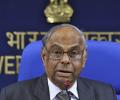
It is time for the three finance ministers of the 1990s to reveal the real hero, says T C A Srinavasa-Raghavan.

Is the worst over for Indian banks? The past two years saw them ride on treasury trades as deposits soared and credit growth dipped sharply. Gross and net non-performing assets (NPAs) moved south, and the provision coverage ratio (PCR), capital buffers, and profitability indicators are back at pre-pandemic levels. So, what's the plot ahead?
Managing expectations is a challenge for policymakers.

'We believe there will be a full shutdown for four weeks and a partial shutdown for eight weeks.' 'Hence, economic activity is unlikely to normalise before the end of May.'
